How Do Ads Know So Much About You?
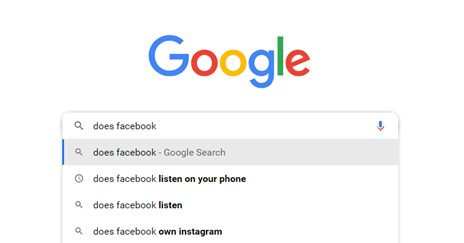
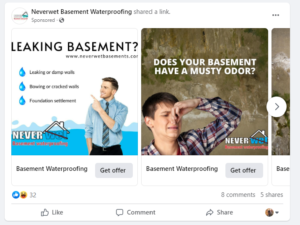
We’ve all been there. You’re scrolling through Facebook, and you see an ad that was for something you were JUST talking about! How in the world did they know? If you type in “does Facebook” on Google, the first auto populated option is “does Facebook listen on your phone”. I had a similar moment just the other day where I hopped on Facebook and saw an ad for a solution to a wet basement. Just that morning I walked downstairs and had water in my basement. Is it a coincidence or conspiracy?
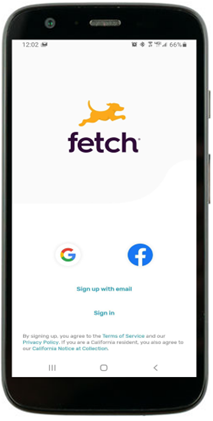
With everything that you do online, and even offline, you’re leaving little “breadcrumbs” about your behaviors. It seems like common knowledge that if you’re looking for a car online that you start to see ads for other cars, but what isn’t so obvious are actions like places that you visit, apps that you download, purchases you make, or forms you fill out that are all gathering data. With all these actions, you are giving information about yourself and what you’re interested in, maybe without even knowing it. For example, one app that I have on my phone is the Fetch app. This is a free app where you can earn rewards by taking pictures of receipts. You take a picture of a receipt, you get points, and then you can redeem those points for gift cards to Amazon, Target, Wal-Mart, Starbucks, Dunkin’, and more. It’s free and it’s easy so that’s great, and with those rewards, comes the opportunity for data collection.
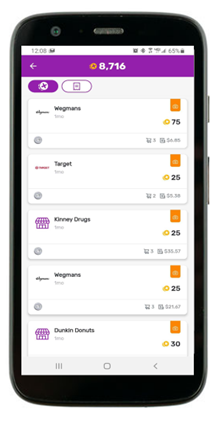
With Fetch, when you create an account, you have option to log in through your Facebook account, your Gmail account, or to create a login. Right there alone, if I log in with my Facebook or Gmail account, that is data that they (Fetch) are collecting and then sharing with Facebook or Google. Now when using those platforms, Facebook or Google, I have the potential to see targeted ads based on the information that was shared through Fetch, like what I bought at the grocery store, Target, or the drug store. This is just one example of how data can be collected and shared amongst data providers and vendors.
Now think of all the apps you have on your phone, loyalty accounts you sign up for to get discounts, or all the places where you bring your phone. All that information is data that can then be sold to data providers. We are integrated with all the major third-party data providers like Oracle, Eyeota, Dstillery, comScore Inc., Bombora, and more.
Products that we offer that have the option to use third party data with Behavioral Targeting are Display, Native, Video Pre-Roll, Social Mirror, Over-the-Top (OTT), and Online Audio. Other products that we offer, like Amazon, Mobile Conquesting, Facebook and Instagram, and LinkedIn also use first-party data. First-party data is the information collected directly from individuals by a company or organization. It is the data that a company collects from its own customers or users, typically through interactions, transactions, or engagements with their own website, mobile app, or other owned platforms. First-party data is considered the most valuable and reliable type of data as it comes directly from the source.
When it comes to Facebook/Instagram, LinkedIn, or Amazon, these are all platforms where you are creating an account and engaging and interacting with the platform so that it starts to learn about what you’re interested in, what content you like to see, etc.. For Facebook, there are several ways they can gather information:
- Content you create, posts you like, comments, or audio (you can create audio content, like if you’re a host or speaker in a Live Audio Room. Live Audio can be listened to by anyone in the audience for the broadcast.)
- Content you provide through the camera feature or your camera roll settings, or through the voice-enabled features.
- Messages you send and receive, including their content, subject to applicable law. Facebook can’t see the content of end-to-end encrypted messages unless users report them for review.
- Data about content and messages, subject to applicable law.
- Types of content you view or interact with, and how you interact with it.
- Apps and features you use, and what actions you take in them.
- Purchases or other transactions you make, including credit card information.
- Hashtags you use.
- The time, frequency, and duration of your activities on Facebook products.
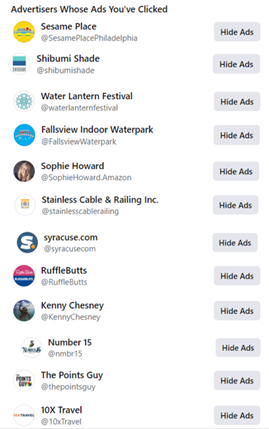
I was recently served an ad on Facebook that was somewhat irrelevant to me since I wasn’t interested in it, so I clicked on it to elect to not see it again and it gave me various options on why I didn’t want to see that ad again. From there, I also saw an option of “why did I see this ad”. When I click on that, it showed me what ads I have clicked on. From there, Facebook uses that to show me other ads that it think I might be interested in. Sometimes it’s a slam dunk, and other times it’s a complete air ball, but one little click can open a whole new world of ads.
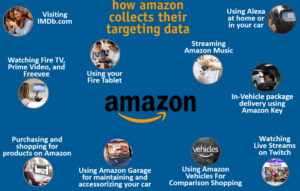
Amazon is similar in that it has a wide range of where it is getting its data from such as purchasing and shopping for products on Amazon, Watching FireTV, Prime Video, or Freevee, visiting IMDB.com, using a Fire tablet, streaming Amazon music, using Alexa, Amazon Garage, watching Twitch, and more. Every interaction with those platforms and products with Amazon is gathering first party data that advertisers can then use to target ads to.
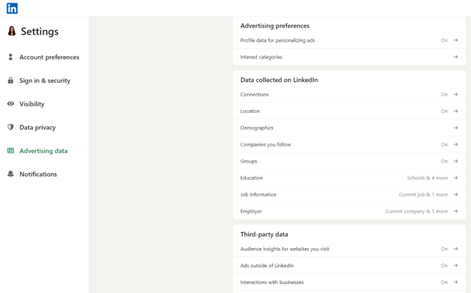
When we are targeting people through category targeting on LinkedIn, we are creating that audience based on information they have provided about themselves and their companies. When you set up a LinkedIn account, you are adding your job title, where you went to school, where you currently work, where you used to work, your skill set, your interests, and more. This is all information that LinkedIn can use to tailor the ads that you see on LinkedIn.
Mobile Conquesting is another product that uses first party data along with third-party data, but unlike Facebook, Amazon, or LinkedIn, you don’t have to have an account with these ads. The way that Mobile Conquesting is getting first party data is based off various data partnerships. We have partnerships with various supply partner aggregators that give us access to over 100,000+ mobile apps. These apps pass back data and are also a means to serve ads within. For example, one of the most common apps is WeatherBug. This app gives us access to first party data to around 15 million devices. Another source of data is through the Mobile Exchange Software Development Kit (SDK). Our software is embedded into various apps that allow the apps to pass back location data points so we can target people who have recently been to certain locations or brand name stores.
In today’s digital landscape, our online and offline activities generate a wealth of data that companies collect and utilize for targeted advertising. From the apps we use to the platforms we engage with, every interaction leaves a digital footprint that can be analyzed and leveraged. Whether it’s the information we share willingly or the data collected through various means, targeted ads have become an integral part of the online experience. While it’s essential to be aware of the data we generate and how it is used, it’s equally important to understand that our actions as consumers enable these practices to take place.
Ready to learn more? Fill out the form below and our team will reach out for a free consultation:
Contact Us