Are You Ready For SEO In The Age Of AI?
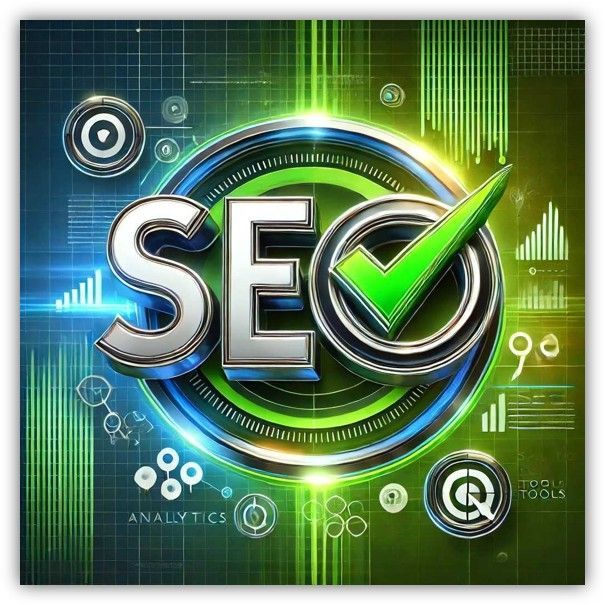
It’s a whole new ballgame with SEO since AI platforms have gained in dominance. Google’s recent core updates emphasized originality and relevance to rank high on a search page. Meaning you will be rewarded for content that offers unique insights and value rather than relying on generic or AI-generated material. Businesses should focus on creating well-researched, user-focused content that aligns with Google’s E-E-A-T principles, while optimizing for local and zero-click searches to maintain visibility in an increasingly competitive digital landscape.
Key Take-Aways:
- Google’s core algorithm updates give greater preference to content that demonstrates originality and helpfulness, impacting businesses rankings and signaling a preference for unique, insightful, and user-focused, informative content over generic, promotional or AI-generated material.
- Businesses should prioritize creating content that shows Experience, Expertise, Authoritativeness, and Trustworthiness, including naturally incorporated keywords, relevant visuals and engaging layouts to improve user experience.
- With Google’s AI Overview and zero-click searches reducing organic traffic, businesses should optimize their Google Business Profiles, focus on local SEO with geo-specific keywords, and create content like FAQs and blogs addressing customer questions.
- Key factors for SEO success include factors that a business can do themselves and Technical SEO that should be done by a professional SEO expert. In this post we will explore both.
- Actively managing online reviews, engaging with customer feedback, and maintaining accurate business listings in directories help improve search rankings, build credibility, and enhance visibility across platforms.

What Are Google Core Updates:
Google had 4 “core updates” to their algorithm in 2024 (March, August, November & December) and all 4 had impact on how they rank content on websites. Many believe that these core updates signal Google’s war on AI generated content on websites. Does Google penalize AI content on your website? In various forums, Google representatives have said that Google doesn’t automatically detect and penalize AI-generated content. What they have said is that Google highly values originality. This means that repeating generic or widely available information without adding new insights can harm content rankings, as search algorithms prioritize unique, helpful content.
The proof? In a study of websites relying on AI content, they lost an average of 17% of their traffic and dropped eight positions in search rankings. Conversely, 85% of marketers saw increased rankings for content that offers original insights or perspectives. According to Google’s Search Central Blog, they’re focused on “helpful” content, regardless of whether a human or AI created it. Content that lacks credibility, is generic (easily found on AI platforms) and not original, or fails to add user value, may be demoted in search rankings.
Sources: https://www.inc.com/ben-sherry/googles-latest-search-update-suggests-business-owners-need-a-new-content-marketing-strategy/91019074; https://neilpatel.com/blog/googles-spam-update/; https://writesonic.com/blog/does-google-penalize-ai-content
What Should A Business Do?
- Focus on creating unique, insightful content that goes beyond superficial, well-known information.
- Google core updates emphasized E-E-A-T: Experience, Expertise, Authoritativeness, and Trustworthiness. Enhance AI-generated content with human insight and expertise. Show trustworthiness and authoritativeness by showing well-researched information with proper citations and sources.
- Incorporate keywords naturally rather than repetitive keyword use. You should aim for a keyword density of 2-5%. (If you use your target keyword 10 times in a 1000-word blog post, you’ll have a keyword density of 1%.)
- Articles with relevant images get 94% more views than text-only articles. To keep users engaged: organize your content into short paragraphs under clear, short paragraph headlines, use bullet points and lists (formatted like this blog!).
- Look at time spent by visitors on your pages (Google Analytics). If someone stays on your content, it signals to Google that they found what they were looking for, but if they bounce back to search results quickly, it thinks your content wasn’t helpful.
- Google also rewards pages that load quickly and are easy to navigate. Check your website loading speed at https://developers.google.com/speed/pagespeed/insights
Sources: https://www.inc.com/ben-sherry/googles-latest-search-update-suggests-business-owners-need-a-new-content-marketing-strategy/91019074; https://neilpatel.com/blog/googles-spam-update/; https://writesonic.com/blog/does-google-penalize-ai-content
Example Of Optimizing A Blog:
- A unique and engaging graphic (you can ask an AI platform to create one).
- Have a strong headline that usually is formed as a question or an answer to a perceived question.
- An opening sentence that describes your overall proposition for the article and is in a larger font than the rest of the article.
- A “takeaways” section towards the beginning which outlines 4-6 bullet points that are the key points of the article. (Upload your post to an AI platform and ask it to summarize in 4 bullet points).
- Ask yourself: Is this content going to provide the reader with useful information that can’t easily be found anywhere else?
- Use AI to research information and provide idea starters but you need the human touch for originality, to maintain credibility and quality in your content, and avoid being penalized by Google.
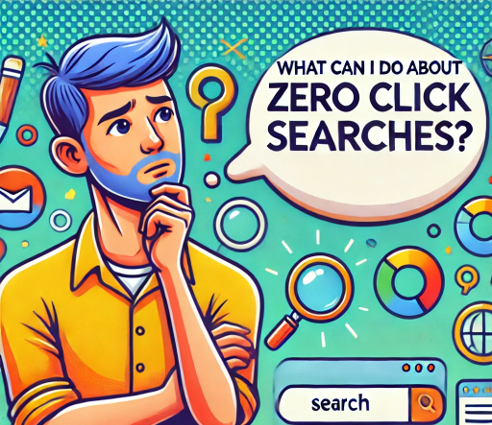
Zero-Click Searches – What A Business Should Do:
- Google “AI Overviews” continue to eat into the organic search traffic volume, the SEO traffic is predicted to drop 30% for informational queries in the next year because users get their info from the Google AI Overview Snippet. This is called a Zero-Click Search.
- Optimize Google Business Profile to ensure your client’s Google Business Profile is fully claimed and verified. Complete every section.
- Actively encourage and respond to customer reviews, which appear prominently in zero-click search results.
- Use Google Posts in the Google Business Profile to share news, promotions, or events. This will help ensure a Knowledge Graph appears when the business name is Googled.
- Focus on Local SEO using local geo-specific keywords like “best pizza in [city]” in website content, meta descriptions, and Google Business Profile.
- Collaborate with local blogs, newspapers, and directories to gain relevant backlinks. Include terms like “near me” in your content where relevant, to optimize for near me searches.
- Create FAQs, blogs & optimized content to address common customer questions directly on your website. These could be selected as featured snippets or directly answered on SERPs or AI platforms.
- Maintain active social profiles, as they may show up in search results. Share regular updates, promotions, and customer testimonials to maintain engagement.
- Ensure website is mobile-friendly since most zero-click searches are conducted on mobile. Test loading speed and navigation.
- Monitor local search metrics using tools like Google Analytics, Google Business Profile Insights to see traffic and engagement. This will help you determine what content is resonating with visitors.

Appearing In AI Platform Results – What A Business Should Do:
- How does a business get mentioned on an AI Platform? AI Platforms (LLMs) are taught their information and one of the key inputs is Google Search results. So all of the things that get you noticed by Google will in turn get you noticed by LLMs!
- Getting reviews from more sources than just Google (angie, yelp, bbb.org). Adding reviews from customers and testimonials to the home page of the site.
- Use superlatives, and describe the quality of your work in your content (LLM’s seem to take things very literally – if you say “we provided excellent customer service” they believe it.)
Pay-Per-Click Ads & Organic Listings:
- A business appearing as high up in the Organic Listings of Google is critical.
- It’s important to appear at the top of Google’s organic listings for your primary keywords, because the first 3 organic listings get more than half the clicks.
- On average, only about 1% of all website traffic to a business website comes from paid search ads. The other 99% of website traffic comes from organic search or other websites.
- Why is organic traffic so important?
- It’s free exposure on the Google search page.
- You can reach people who have never heard of your brand before.
- You can bring visitors with a relevant and specific intent to your site.
- You can reach people locally or worldwide.
- It can be targeted and scaled with a content/SEO strategy.
- It can build your credibility.
Sources: https://www.mediapost.com/publications/article/397414/nearly-two-thirds-of-google-searches-stay-within-i.html; Datos; SparkToro
The info we’ve covered in this webinar so far, are all things you can coach your clients to do on their own to improve their SEO rankings. Now we look at how our SEO campaigns help them improve their SEO rankings. We do the “Technical SEO”.
Technical SEO:
On-Page SEO Factors: Title, Meta and ALT Tags, URL Structure, Keywords, Quality of Content, Site Maps, Inbound & Outbound Links, Speed, Error Messages, Voice Search Optimization.
- TITLE TAGS are html code on a business’ website that displays on search engine results pages as the clickable headline for an organic search result. They are meant to be an accurate and concise description of a page’s content for both the search engine and the user. Every page of a website should have a unique title tag. This helps search engines understand that your content is unique and valuable, and also drives higher click-through rates.
- META DESCRIPTION TAGS provide descriptions about the webpage, which can be used by search engines to help categorize the page correctly and users to understand what is on that webpage. Every page of a website should have a unique meta description tag. It’s like a free snippet of advertising for your business.
- ALT TAGS are used by search engine crawlers to decipher what an image represents.
- URL STRUCTURE is what search engines look at to analyze a website. If it is confusing they may index only a fraction of the website’s pages.
- KEYWORDS utilized on your website help search engines connect searchers to your site. We’ll determine what keywords the client can rank for. One strategy is to focus on long-tail keywords when you’re in a highly competitive keyword vertical. These are keywords that generally have lower search volume than short-tail keywords (or “head terms”). For example, rather than trying to rank for “pie,” you target “homemade blueberry pies near me”.
- QUALITY, FRESHNESS OF CONTENT refers to how often content is added, updated and linked to, how authoritative and trustworthy it is. Fresh content impacts SEO in multiple ways: It enhances the user experience, encourages frequent crawls by search engine bots, improves relevance and authority within your niche, targets long-tail keywords, boosts user engagement, opens up opportunities for valuable backlinks. With our SEO campaigns we discuss content strategy on earning higher search traffic for core keywords and we optimize the client’s content for SEO once published.
- Research has shown that video content is many times more likely to appear at the top of Google search pages than a web page with just written content. Encourage your clients to put video on their website. Videos have been found to boost on-page engagement, which is a powerful rankings factor. The majority of web users prefer watching a video to reading words. Using videos on a landing page can increase conversions by 86%. The average user spends 88% more time on a website with video.
- INBOUND & OUTBOUND LINKS refers to the amount of traffic on your site and the number of quality links coming into your website from other websites and links you have on your website to other websites.
- ERROR MESSAGES such as Page Not Found can lower your rank position.
- VOICE SEARCH OPTIMIZATION is helping a business to be featured in the Google AI Overview or the Featured Snippet at the top of a search page which means that users who voice search will hear that read aloud by the voice assistant.
- How does our technical SEO help a website get featured in the AI Overview & snippets? Analyzing the website’s loading speed and making suggestions. Suggesting long tail keywords on the business’ website not just stand-alone keywords. Optimizing the URL structure and internal linking are effective ways to ensure that Google can easily crawl and index the website.
Off-Page SEO Factors: Online Directories, Submitting to Search Engines, Online Reputation Management.
- SEARCH ENGINE SUBMISSION includes the top 3 (Google, Bing, Yahoo) and also important but lesser known search engines.
- DIRECTORIES SUBMISSIONS is important because directories rank well for search terms and give you relevant links to your website from the directory’s website.
- Getting your local business’ NAP (Name, Address, Phone number) information listed on directories, online business listing sites, and citation sites helps to improve visibility of your website. Backlinks from these sites (the sites linking back to your website) can also have a benefit to your search engine ranking.
Ready to learn more? Fill out the form below and our team will reach out for a free consultation:
Contact Us